
Start with what customers need to know
Someone looking for a landscaper or tree surgeon usually arrives with a specific job in mind. They might want a tired garden redesigned, a new patio installed or advice about an overgrown tree. Your homepage should quickly explain what you do, where you work and how to ask about a job. A clear introduction such as ‘Landscaping and garden construction across Sussex’ is more useful than a vague slogan.
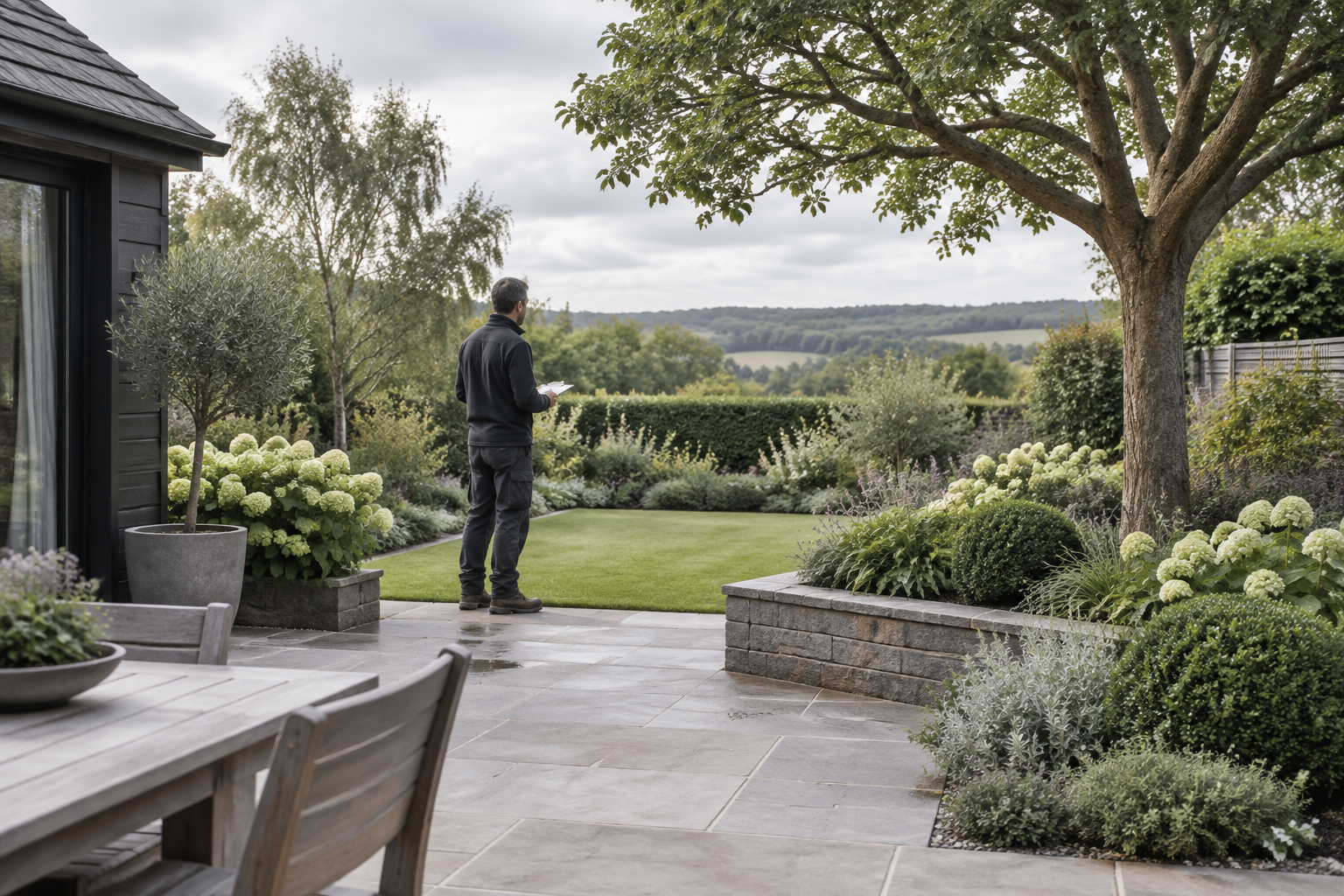
Build the opening section around a strong photograph of your own work, a short service summary and an obvious enquiry button. Keep your phone number easy to find, particularly on mobile. If landscaping and tree surgery are both part of your business, give visitors separate routes into each service rather than making them search through one long page.
Be precise about your coverage. If you work around Burgess Hill and nearby parts of Sussex, say so. Avoid suggesting you cover the whole county if travelling further afield is rarely practical.
Give each main service its own useful page
A single ‘Our services’ page can introduce your business, but individual pages give customers space to understand what you offer. A landscaping website might need pages for garden design, paving, fencing and planting. A tree surgery website could separate pruning, removal, hedge cutting and stump grinding. Only include services you genuinely provide.
Each page should answer practical questions: what does the service involve, which jobs do you take on, and what happens after someone enquires? For tree work, explain how you approach access, waste removal and any permissions checks relevant to the job. Avoid blanket promises that every tree can be removed or every enquiry handled immediately.
Use local search phrases where they read naturally. ‘Tree surgery in Burgess Hill’ might fit a page title if that is a genuine service area. Repeating ‘Sussex tree surgeon’ in every paragraph will make the page less helpful, not more convincing.
Make your project gallery tell a story
Landscaping is visual, so a well-organised gallery can do more than a page of broad claims. Show complete projects as well as close-up details: paving edges, planting combinations, fencing finishes or a cleared site after tree work. Use your own photographs, with permission where needed, and avoid presenting stock imagery as completed work.
Turn selected jobs into short case studies. Explain the original brief, any practical constraints and what you delivered. A general location can add useful context without identifying a customer’s property. Before-and-after photographs work best when they show comparable viewpoints and accurately represent the change.
Keep image files optimised so the gallery remains usable on a mobile connection. Add descriptive alternative text where appropriate, and make sure visitors can move from a relevant project directly to its service page or an enquiry form.
Build trust with clear, verifiable information
Customers are inviting you onto their property, often to carry out substantial or specialist work. Your website should make it easy to understand who they will be dealing with. Include a straightforward introduction to the business, real team photographs where available and a simple explanation of your process.
Mention qualifications, insurance and professional memberships only where they are current and relevant. Published reviews should be genuine and used with appropriate permission. Clear details about site visits, quotations and tidying up can also help people decide whether your approach suits their job.
- Introduce the people behind the business and their roles.
- Show genuine examples of the services you advertise.
- Check that credentials and membership details are accurate.
- Explain what a customer can expect after making contact.
- Keep contact details and business information consistent.
Connect local search with an easy enquiry process
Local visibility starts with accurate information. Keep your website and Google Business Profile aligned on your services, contact details and coverage. Dedicated area pages can be useful when you have something meaningful to say about working there, such as relevant projects or service arrangements. Avoid creating near-identical pages that simply swap one Sussex town name for another.
Once someone reaches the site, make enquiring straightforward. A short form can ask for their name, contact details, postcode and a description of the work. An optional photo upload may help you understand a garden or access issue before discussing a visit, although photographs cannot replace an assessment where one is needed.
Test the whole journey on a phone. Navigation, image galleries, telephone links and forms should all work comfortably. Include a clear privacy notice, and explain the next step without promising a response time you cannot reliably meet.
Get a quote for your landscaping or tree surgery website
The best starting point is a website that reflects your actual services, showcases your work and helps suitable customers contact you. You do not need every possible feature at launch; a clear structure and useful content matter more than unnecessary complexity.
KyDesign is a web design and branding studio based near Burgess Hill, Sussex, founded by Kyle Butler in 2019. We build WordPress and bespoke CMS websites and provide brand identity and ongoing website support. If you are planning a new landscaping or tree surgery website, or improving an existing one, get in touch for a quote. Tell us what you offer, where you work and what you need your website to do.
Related:
Request a project quote ↗